
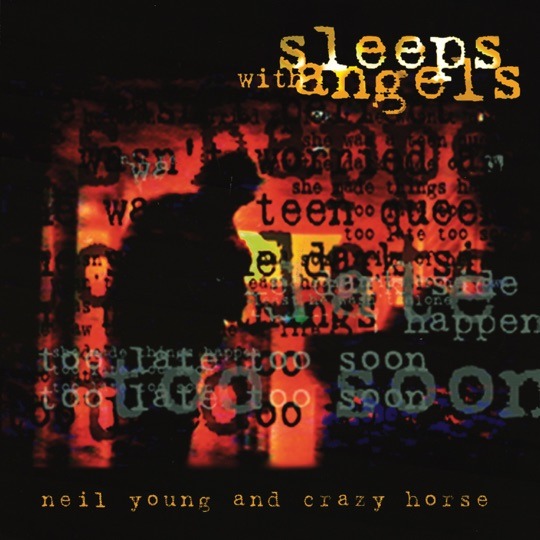
Neil Young & Crazy Horse’s 1994 album Sleeps With Angels explores grunge era darkness on vinyl
Neil Young’s 1994 album Sleeps With Angels stands as a poignant reflection on the turbulent spirit of the early 1990s, channeling the darker currents of the grunge movement that were upheaving the rock landscape. Far from a mere tribute, the record engages deeply with themes of loss and societal turmoil, navigating a complex emotional terrain shaped by grief and disillusionment. The title track, in particular, carries a haunting resonance tied to the death of Kurt Cobain, emblematic of the fraught cultural moment Young inhabits here. Delivered with the enduring support of his longstanding backing band Crazy Horse, the album reveals some of Young’s most impassioned performances in years, blending raw intensity with subtle narrative depth.
Though the album is suffused with a somber atmosphere reminiscent of Young’s mid-1970s work such as Tonight’s the Night, it also demonstrates a fresh dynamism. The soundscape crafted by Crazy Horse under Young’s direction shifts from their classic grunge-tinged roar to a more textured and uneasy mood, reflecting the unsettled state of the era. Tracks like “Driveby” poignantly address the pervasive issue of urban violence through an acoustic lens, while “Safeway Cart” depicts desolation and homelessness with hypnotic basslines that underscore the album’s brooding narrative. This approach situates Sleeps With Angels within a zone adjacent to alternative and hard rock, where the singer-songwriter tradition intersects with the protest and experimental undertones prevalent in early 90s rock.
Neil Young’s career, marked by a cluster of genre-defining albums from the late 1960s through the 1970s, such as After the Gold Rush and Harvest, lays a contextual foundation for this 1994 work. Sleeps With Angels can be seen as a continuation of his exploration of American cultural and political landscapes, albeit with an edge sharpened by the grim realities of the 1990s. Fans of artists who have similarly grappled with societal critique via an emotional lens, such as Bruce Springsteen’s narrations of working-class hardship or the raw intimacy of Bob Dylan’s later acoustic material, may find resonance in this album’s fusion of poetic songwriting and rock intensity. Furthermore, the dynamic partnership between Young and Crazy Horse recalls the collaborative spirit found in earlier albums like Rust Never Sleeps, where the band’s chemistry equally shapes the record’s identity.
The release of Sleeps With Angels and its place in Neil Young’s discography highlight an artist wrestling with both personal loss and broader societal issues, wrapped in a sonic palette that balances raw energy and melancholic introspection. The album’s sound design, straddling hard rock and more reflective alternative forms, aligns it with contemporaries navigating the shifting currents of the 90s music scene, including bands like Pearl Jam and Soundgarden, who also infused their work with a spirit of urgency and emotional depth. Yet, Young’s distinctive voice and songwriting place the album in a space that transcends simple genre classification, inviting a thoughtful listening experience that remains relevant decades later.
For collectors and listeners invested in the evolution of rock and singer-songwriter traditions on vinyl, Sleeps With Angels represents more than a mere artifact. It encapsulates a critical moment of artistic response to grief and change, framed by the collaborative efforts of one of rock’s most enduring figures and his trusted band. The album’s release on vinyl offers an opportunity to revisit this layered narrative with the warmth and presence that the format uniquely provides, appealing particularly to those who follow independent and legacy label offerings that preserve such seminal works in high-quality physical editions. As these themes and sounds continue to echo through contemporary music, this record remains relevant for new generations seeking depth and authenticity in rock music’s complex history.
In sum, Sleeps With Angels emerges as a vital chapter in Neil Young’s ongoing exploration of America’s cultural fault lines, blending the grit of rock with the emotional intensity of singer-songwriter storytelling. Its interplay of themes related to loss, social commentary, and musical reinvention positions it as a work of enduring significance, offering a nuanced portrait of an era that still resonates in today’s musical landscape.
Learn more about Neil Young