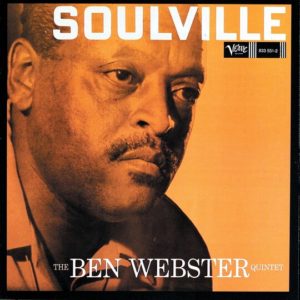
Jazz is a genre of music that originated in the African-American communities of New Orleans in the late 19th and early 20th centuries. Rooted in blues, ragtime, spirituals, and African rhythmic traditions, jazz is defined by improvisation, swing rhythms, expressive phrasing, and the blending of African and European musical elements. Its development reflects complex cultural exchanges, making it one of the most influential and enduring forms of modern music.
The foundations of jazz lie in early ensemble traditions such as brass-band music, Creole dance styles, and the blues-based structures heard in the Mississippi Delta. Early jazz, often called New Orleans jazz or Dixieland, featured collective improvisation and lively horn arrangements. Key pioneers include Louis Armstrong, whose virtuosic trumpet playing and innovative solo style revolutionized the genre, and Jelly Roll Morton, one of the first to formally compose and arrange jazz music.
In the 1930s and 1940s, jazz expanded with the rise of the Swing era, marked by big band arrangements and dance-oriented rhythms. Leaders such as Duke Ellington, Count Basie, Benny Goodman, and Chick Webb helped define this period with sophisticated orchestrations and charismatic performance styles. As swing declined, a new modern style emerged: bebop, characterized by fast tempos, complex harmonies, and virtuosic improvisation. Pioneers like Charlie Parker, Dizzy Gillespie, and Thelonious Monk transformed jazz into an art form focused on creativity and technical mastery.
The postwar decades saw further innovation with cool jazz, led by artists such as Miles Davis and Dave Brubeck, emphasizing relaxed tempos and subtle tonal colors. Hard bop, represented by musicians like Art Blakey, Horace Silver, and Clifford Brown, brought blues and gospel influences back into the modern jazz idiom. The 1960s introduced modal jazz, shaped by Miles Davis and John Coltrane, as well as free jazz, pioneered by Ornette Coleman and later expanded by artists such as Cecil Taylor and Albert Ayler, who rejected fixed harmonic structures in favor of open improvisation.
Jazz continued to evolve through jazz fusion in the 1970s, blending rock, funk, and electronic instruments, with key innovators like Herbie Hancock, Weather Report, and Mahavishnu Orchestra. Later developments include smooth jazz, Latin jazz, acid jazz, and contemporary hybrid forms that draw from hip hop, world music, and electronic production.
Today, jazz remains a global and continually evolving art form, performed in clubs, concert halls, festivals, and academic institutions. It is celebrated for its improvisational spirit, cultural significance, and its powerful influence on nearly every genre of modern music. Jazz continues to thrive as both a living tradition and a platform for new artistic exploration.
Showing 1–12 of 41 resultsSorted by latest