
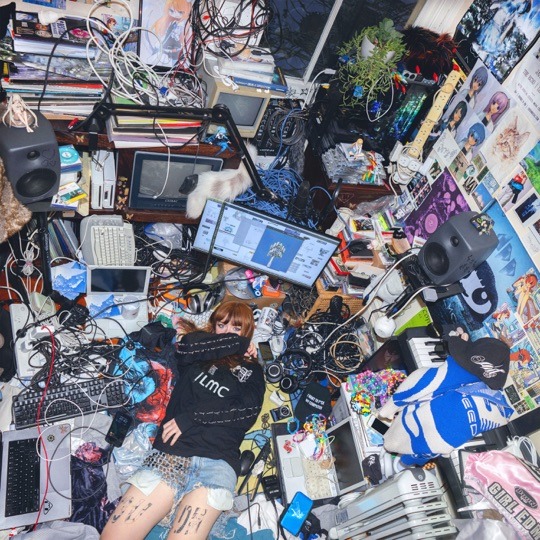
Description
Nina Wilson, known professionally as Ninajirachi, emerges as a significant voice in contemporary electronic music with her album I Love My Computer, released on February 20, 2026, under the independent American label deadAir. The album, a deeply personal and nostalgic homage to the early 2000s digital era, blends a variety of genres such as EDM, tech-house, speed garage, dubstep, hyperpop, electro-pop, and PC Music influences. This eclectic fusion crafts a rich auditory landscape that explores the intersection of childhood memories, technology, and digital culture from an Australian perspective. The release arrives on vinyl, with special colored LP editions offered exclusively through Rough Trade, catering to collectors and enthusiasts invested in physical music formats and the enduring appeal of vinyl culture.
Ninajirachi’s background as an Australian producer and DJ informs the distinctive sonic palette of the album, embedding a regional sensibility into a globally relevant electronic music framework. The twelve tracks feature inventive titles that reflect themes related to computing and internet culture, such as “CSIRAC,” named after Australia’s pioneering digital computer, and “Battery Death,” capturing the anxieties tied to technological dependency. This technological motif serves as a conceptual backbone, offering both a celebration and critical reflection on living in a digitally saturated world. The approach resonates with artistic explorations found in the work of contemporaries like SOPHIE and Arca, while also sharing a certain melodic and rhythmic kinship to early 2010s Australian electronic acts like PNAU and Miami Horror, who similarly fuse pop sensibilities with dancefloor-oriented production.
Musically, I Love My Computer navigates between aggressive club-ready tracks and more introspective, experimental soundscapes. The production showcases Wilson’s adept handling of diverse subgenres, crafting a cohesive album that balances high-energy moments with nuanced emotional textures. Her deft incorporation of tech-house and speed garage beats anchors the rhythmic drive, while hyperpop and electro-pop elements add vibrant melodic hooks and futuristic sheen. The record’s narrative is enhanced by track sequencing that transitions smoothly from tracks like “London Song” and “iPod Touch,” which evoke a youthful sense of discovery and isolation, to cuts like “Infohazard” and “Delete,” reflecting on the darker aspects of online life. Such a structure invites listeners into a layered experience, one that recalls the work of experimental electronic producers such as Laurel Halo or maybe even early Oneohtrix Point Never, where texture and concept are integral to the music’s impact.
The album also marks a significant milestone in Ninajirachi‘s artistic journey, consolidating ideas she has developed over several years. With roots in electronic music circles across Australia and a growing international profile, this release represents her ability to synthesize genres and personal narratives into a compelling artist profile. DeadAir’s involvement speaks to the label’s commitment to forward-thinking electronic music, positioning this album within a catalog known for pushing boundaries. The label’s reputation for championing innovative producers dovetails with Ninajirachi‘s exploratory sound, which moves comfortably in the space between club culture and experimental electronic modes. This partnership situates the album firmly within the expanding dialogue around electronic music’s evolution in the mid-2020s.
Beyond its sound and concept, I Love My Computer extends its cultural relevance through its format and distribution strategy. The vinyl edition, particularly with the limited color variants exclusive to Rough Trade, underscores the ongoing significance of physical media in an era dominated by digital streaming. For vinyl collectors and aficionados of contemporary electronic music, this release offers not only an aural experience but also a tangible artifact that complements the album’s themes of technological nostalgia. The vinyl’s presence is part of a broader movement wherein electronic artists maintain close connections to independent labels and boutique record stores, fostering communities that value music as both sound and object. In this regard, Ninajirachi’s album fits into a lineage of records that harness physical formats to deepen listener engagement.
Listeners drawn to I Love My Computer may find affinities with artists who explore electronic soundscapes that blend emotive melodies with rhythmic intensity, such as Jamie xx and SOPHIE, or who incorporate a sense of place and personal narrative akin to Flume’s work within Australian electronic music. The album’s introspective yet danceable qualities may also appeal to fans of PC Music’s innovative pop forms or the genre-fluid productions of Hudson Mohawke. Through its thoughtful merging of past and present digital aesthetics, Ninajirachi’s latest release contributes to ongoing conversations about identity, technology, and the transformative power of electronic music, highlighting her as an artist to watch within the evolving independent label landscape.